
Later this month, I will give a lecture-concert entitled “MUSIC AND MA” at the beautiful JAPAN HOUSE Los Angeles salon. (More details about the event at the bottom of this blog.)
What is Ma (間)?
Ma is a Japanese concept, sometimes translated as “negative space,” “conscious space” and “emptiness.”
Look at the Chinese character 間. It is a combination of two characters based on pictograms: 門 + 日.
門 is a character developed from a pictogram for gate.
This character is a part of the compound ideograph for 間
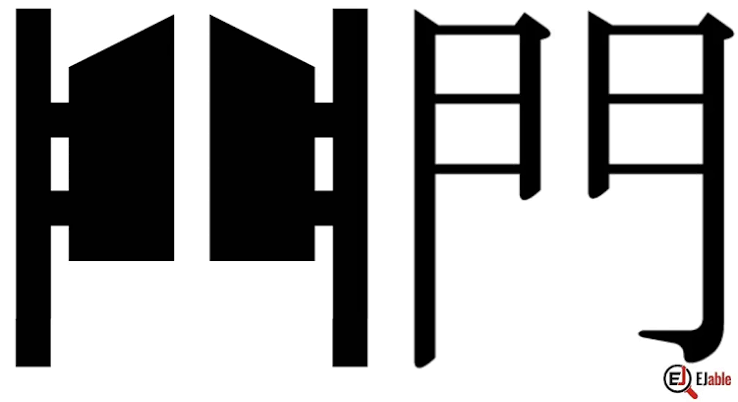
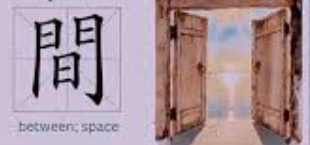
Inserting the character for the sun 日 inside 門 depicts the sunlight shining through the opening of the doorway. It means in-between.
The importance of this concept becomes clear when looking at these following Japanese words.
時間 means TIME in all directions and all conceivable degree of expansiveness. Without 間, 時 alone means a point in time.
空間 means SPACE in all directions and all conceivable degree of expansiveness. Without 間, 空 alone means the sky above, or emptiness.
人間 means HUMAN beings in contrast to all other beings, real and imagined. Without 間, 人 alone means an individual person.
The Japanese 間
The concept of 間 comes up often in contrast to the advancement of capitalism and technology that has led to, for example, Mark Zuckerberg’s “move fast and break things,” and the “growth at all costs” mindset. By setting boundaries, not as a limitation but as a framework, one can find infinite sensory potential in time and space. 間 can serve as an antidote to greed and the modern addiction to speed, efficiency, stimulation and abundance.
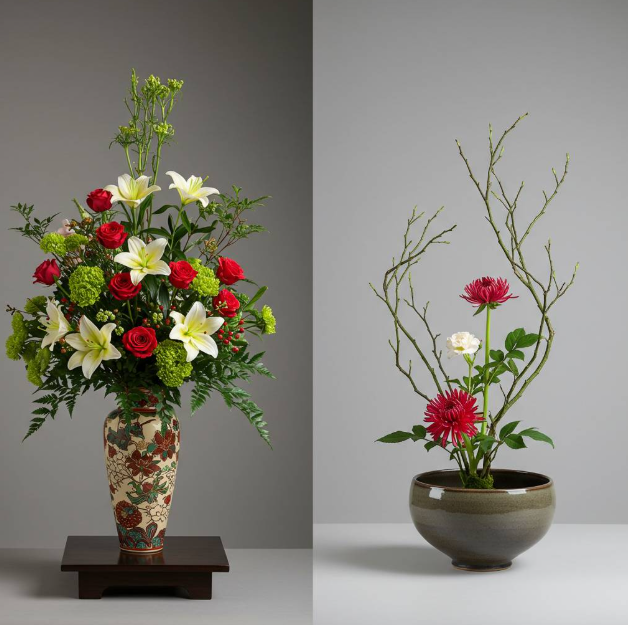
The Universality of 間
My lecture-concert “Music and Ma” will showcase 間 as a inherently human condition and necessity.
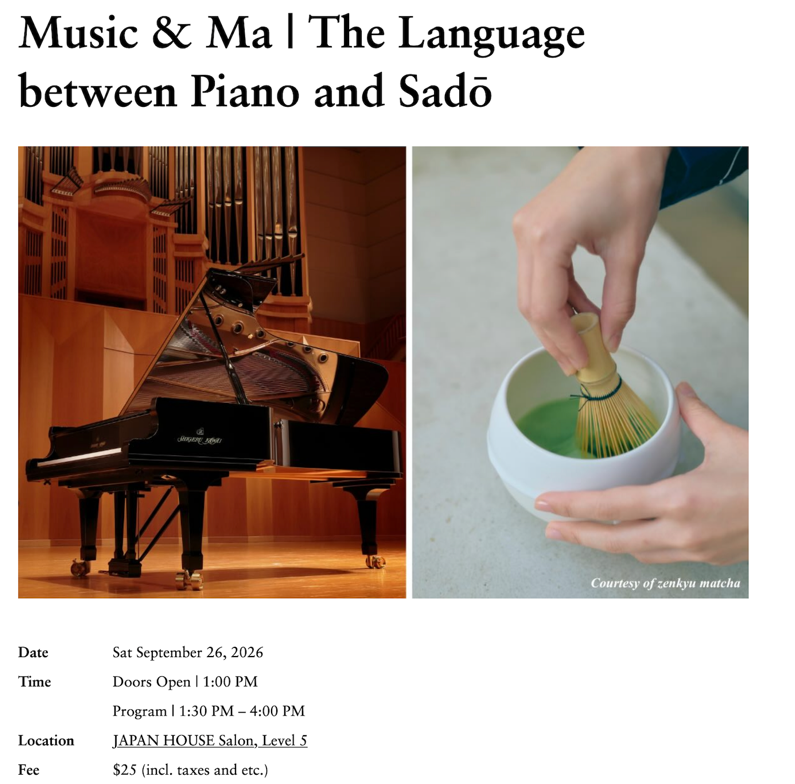
The universal appreciation of the in-between are evident in these ageless quotes.
Between stimulus and response there is a space. In that space is our power to choose our response. In our response lies our growth and our freedom
– Viktor E. Frankl (1905-1997)
Out beyond ideas of wrongdoing and rightdoing,
There is a field. I’ll meet you there.
When the soul lies down in that grass,
The world is too full to talk about.
Ideas, language, even the phrase each other– Jelaluddin Rumi (1207-1273)
And this 2007 study from Stanford University School of Medicine revealed that when listening to music, the “peak brain activity occurred during a short period of silence between musical movements,” showcasing how silence in between was the when brains respond in a tightly synchronized manner.
But without the functional magnetic resonance imaging (fMRI) scanning our brains, we have known this from our own experience. “Music is not in the notes, but in the silence between them,” is a quote by Debussy, but similar quotes are often attributed to musicians like Mozart and Miles Davis. The legenedary 20th-c pianist Arthur Schnabel famously said “The notes I handle no better than many pianists. But the pauses between the notes – ah, that is where the art resides.” Maya Angelous said “Music was my refuge. I could crawl into the space between the notes and curl my back to loneliness.”
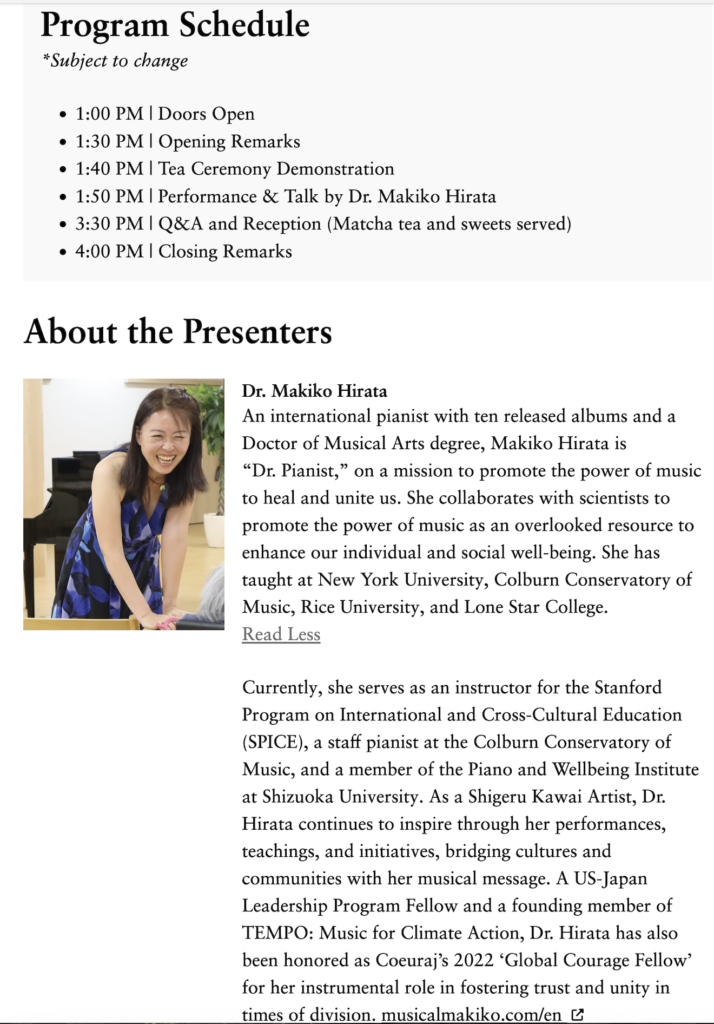
MUSIC AND MA: The Event Details
- when: Saturday, September 26th 1:30-4PM
- where: JAPAN HOUSE Los Angeles Salon, Level 5
- Ovation Hollywood 6801 Hollywood Blvd, Los Angeles, CA 90028
- Parking: Enter the underground parking garage from Highland Ave. in front of Loews Hollywood or on Orange Court between Hollywood Blvd. and Franklin Ave.
- JAPAN HOUSE will offer $3 parking validation for up to 4 hours.
- presenters: Pianist Makiko Hirata, DMA with Sadō instructor Sachiko Okazoe
- program: Following a 10-min tea ceremony demonstration, I will give a lecture-recital with music by Chopin, Debussy, Kosaku Yamada and others.
- Admission: $25 (register here)
- More details at: https://www.japanhousela.com/events/music-ma-multisensory-mindfulness-piano-performance-omotesenke-sado-japanese-matcha-tea-ceremony/
Pingback: 美声日記9.6:音楽と間 - ピアノの道